


Breathing Zidovi i Ventilacija

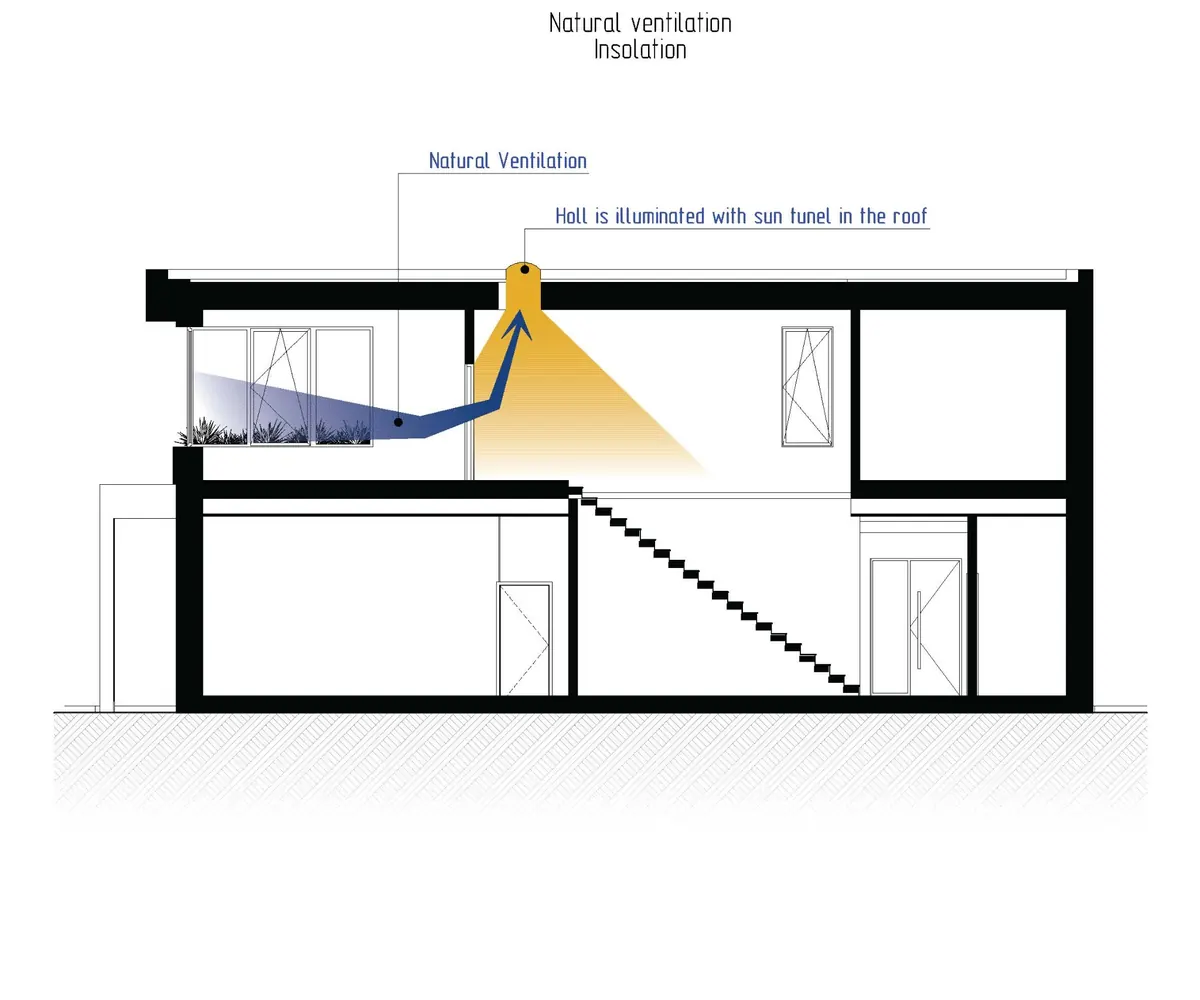
Natural ventilacija može potpora purge airing i daylight strategija, ali baseline zrak quality u niskoenergetski zgrada treba biti projektiran i controlled.
Jezgra idea
Page 01 / 07The useful idea behind breathing walls is drying capacity, not air leakage. A high-performance wall can be vapour-open, moisture-safe and able to dry, while still being airtight against uncontrolled air movement.
Most confusion počinje kada propuštanje zraka i vodena para diffusion su described s isti word: breathing. People treba oxygen, CO₂ dilution i odour removal. Zidovi ne provide to service. zidni sklop treba control toplina, vlaga i trajnost, dok ventilacija sustav supplies i extracts zrak deliberately.
Wrong reading
A leaky wall is treated as a natural ventilation system. In reality, air through cracks is uncontrolled heat loss, pollutant movement and moisture transport.
Better reading
A moisture-safe wall has planned drying paths, correct layer order and controlled air movement through designed ventilation, not through the envelope.
Air vs Vapour
Page 02 / 07Air permeability and vapour permeability are different movements. A wall can be vapour-open while still being airtight, and many high-performance assemblies are designed exactly this way.
Air permeability
- Happens through cracks, unsealed joints, service penetrations, window interfaces and roof-to-wall junctions.
- Driven by wind, stack effect and pressure differences from mechanical systems.
- Moves heat, moisture, dust, pollutants and odours as a mass of air.
- Measured at building level by airtightness testing, typically with a Blower Door.
Vapour permeability
- Happens through the material itself, not through open gaps or cracks.
- Driven by vapour-pressure difference and temperature conditions.
- Described with values such as vapour resistance factor μ and equivalent air layer thickness sd.
- Important for drying potential, condensation control and long-term durability.
Zrakonepropusnost
Page 03 / 07n50 is a quality-control metric, not normal daily ventilation. The Blower Door test shows how much uncontrolled leakage remains in the envelope under test pressure.
The Passive House airtightness criterion is commonly expressed as n50 ≤ 0.6 h⁻¹ at 50 Pa. That means the tested leakage rate must be no greater than 0.6 air changes per hour under the pressure-test condition. It is not a target for everyday fresh-air supply.
Construction logic
The important point is not the number alone. It is the continuous air barrier behind the number: sealed penetrations, window installation, roof and slab junctions, and testing before finishes hide defects.
Moisture logic
Air leakage can carry warm humid indoor air into colder assembly layers, where it may condense. Airtightness reduces that hidden moisture transport.
Ventilation
Page 04 / 07MVHR works best when the envelope is tight. A heat-recovery unit can only recover heat from the air that passes through it, not from air that bypasses it through cracks.
Extract
Warm stale air is extracted from wet rooms, kitchens, bathrooms and utility spaces.
Recover
The heat exchanger transfers much of that heat to incoming outdoor air without mixing the air streams.
Supply
Fresh filtered air is supplied to living rooms and bedrooms at controlled flow rates.
Balance
The system performs correctly only when leakage does not dominate the pressure and airflow picture.
Verify
Commissioning and filter maintenance keep the designed airflow from becoming only a theoretical value.
Fresh-air reference
A common Passive House planning reference is around 30 m³/h of fresh air per person at normal activity. This is about 8.3 L/s per person and helps keep CO₂, odours and humidity within a comfortable range.
Windows still matter
Openable windows are useful for purge ventilation, night cooling and user control. They are not a stable baseline system because airflow depends on wind, temperature difference, rain, noise, security and occupant behaviour.
Mould Risk
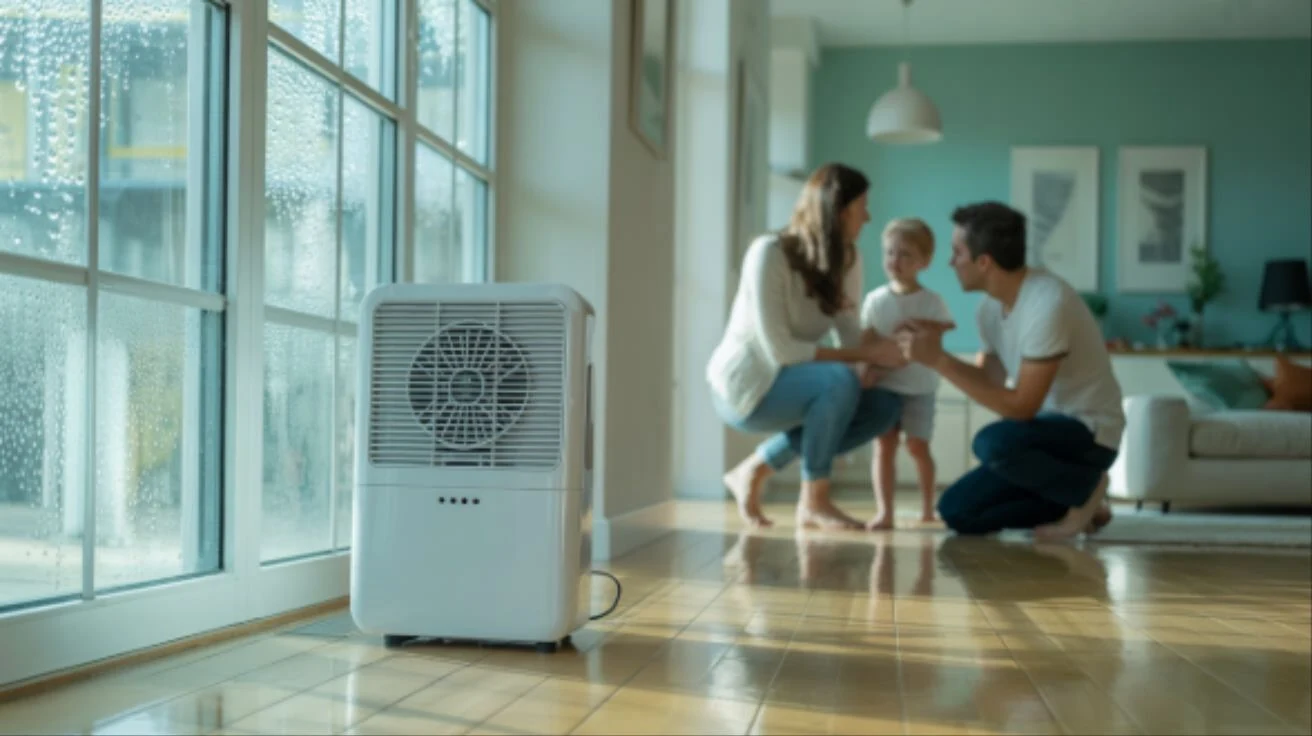
Page 05 / 07Mould is a building-physics alarm, not a cosmetic defect. It appears when moisture remains available long enough on or inside a material.
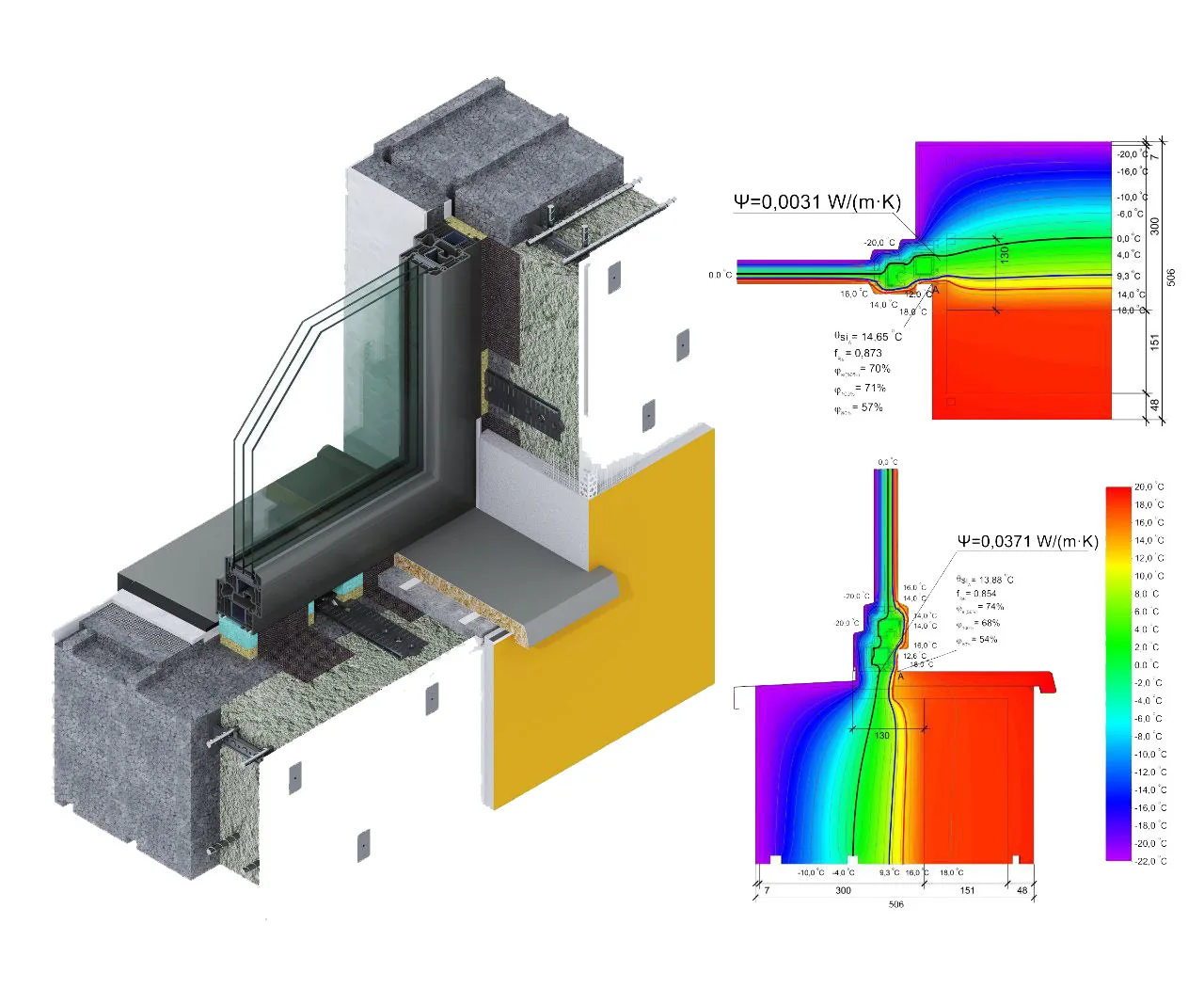
usual causes su hladan surfaces, toplinski mostovi, kondenzacija, mokro izolacija, poor ventilacija, hidden leaks, blocked put sušenjas ili furniture placed against hladan external zidovi. točka rosišta matters jer ono describes kada voda vodena para begins u condense u liquid voda, ali praktičan rizik je whether surface ili materijal sloj stays hladan i mokro long enough za damage.
For the deeper moisture calculation logic, continue with Objašnjenje točke rosišta.
System Logic
Page 06 / 07Passive House Block is a wall system because building performance does not come from insulation thickness alone. It comes from a coordinated envelope.
Airtight
Control air movement through the envelope so fresh air comes through planned ventilation routes.
Dry
Keep structural and insulation layers moisture-safe by designing the layer sequence and drying path.
Warm
Reduce heat loss and cold interior surfaces through exterior insulation and continuous envelope detailing.
Ventilated
Pair the envelope with controlled fresh-air supply, extraction and heat recovery where the project requires it.
The same logic connects this article with the Passive House Block zidni sustav, the Kontinuirana toplinska ovojnica and warm window and door installation. Airtightness, thermal bridge control, window junctions and ventilation should be treated as one building-performance system.

Sources
Page 07 / 07Airtightness and air barriers
Ventilation and indoor air
Moisture and mould


Frequently asked questions
Key ventilation and moisture points from this technical note.
Do breathing walls provide fresh air?
No. Vapour-open or hygroscopic materials can buffer moisture and help assemblies dry, but they do not provide oxygen, remove CO2 or replace ventilation.
Is an airtight house unhealthy?
No. Airtightness stops uncontrolled leakage; ventilation provides controlled fresh air. The unhealthy situation is a tight house without a properly designed ventilation system.
Can I simply ventilate by opening windows?
Windows are useful for purge ventilation and user control, but they are not a stable baseline system. Airflow depends on wind, temperature difference, user behaviour, rain, noise and security.
Does vapour-open insulation always prevent mould?
No. Vapour openness can help drying, but it does not fix air leakage, rain penetration, thermal bridges or wrong layer order. Wet insulation also performs worse.
Why does mould often appear around windows and corners?
Windows and corners are common cold-surface zones. If surface temperature is low, local relative humidity rises, and poor ventilation can allow mould growth.
More Tech Lab articles.
Dew Point Explained
Condensation risk, wet insulation behaviour and why internal wall insulation needs special care.
Read article
Passive House Block Walls
Exterior insulation, reinforced concrete core and the build logic behind the main wall system.
Read article
 Continuous Thermal Envelope
How insulation, airtightness and thermal-bridge control stay continuous around the building.
Read article
Continuous Thermal Envelope
How insulation, airtightness and thermal-bridge control stay continuous around the building.
Read article