


Answer-first summary
An insulated Swedish slab, often called UShP in Eastern European practice, is a shallow reinforced concrete foundation built together with continuous insulation, service routes and warm-floor heating pipes. For Passive House Block, the important idea is not the name of the slab, but the system logic: the ground connection, thermal envelope, drainage, reinforcement and building services are coordinated before the wall shell starts.
The concrete slab stays inside the insulated envelope instead of acting as a cold ground edge.
Perimeter insulation, wall starter and waterproofing are coordinated before the shell begins.
Pipes, ducts, manifolds and sleeves are fixed while corrections are still inexpensive.
Key takeaways
- The slab concept combines a shallow monolithic reinforced concrete foundation with built-in services and a warm-floor heating system.
- The slab should be treated as a thermal-envelope detail, not only as a structural base.
- Perimeter insulation, edge insulation and service penetrations are the risk points that need early design coordination.
- Warm-floor pipes can work well in this build-up, but they must be coordinated with reinforcement, zones, manifolds and future maintenance access.
- Soil, drainage, frost protection and point loads still decide whether this foundation type is suitable for a specific site.
What the slab concept gives us
The insulated Swedish slab is a useful technical starting point because it treats foundation, insulation, services and floor heating as one coordinated build-up. The slab is a shallow monolithic reinforced concrete foundation with continuous insulation and planned service routes, which makes it an R&D topic for foundation detailing rather than a generic base detail.
In a high-performance house, the foundation is not just where the building stands. It is one of the main thermal-bridge zones. The floor-to-wall junction, the slab edge, the service penetrations and the ground moisture strategy all affect comfort, energy demand and durability.
Why this matters for Passive House Block
Passive House Block wall systems put the structural mass inside the insulated envelope. A warm foundation should follow the same principle. The concrete slab can provide mass and stiffness, while insulation below and around the slab reduces heat flow into the ground and helps keep the wall-to-floor junction warmer.
The strongest version of the detail is designed as one system: compacted base, drainage layer, capillary break, under-slab insulation, perimeter insulation, reinforcement, concrete slab, embedded services and the warm-floor layout. If any of those layers are improvised on site, the final result can still look clean while losing performance at the edges.
Technical implications
The most important design task is the perimeter. A slab may have good insulation under the field area, but still lose heat at the edge if the vertical insulation, wall starter, waterproofing and facade line are not aligned. The Passive House Block wall should meet the slab insulation with a continuous thermal path, while structural loads still transfer safely into the foundation.
Service penetrations are the second risk area. Drainage, water, electrical ducts and heating manifolds must pass through the slab without creating uncontrolled air leakage, moisture paths or cold bridges. This is why UShP should be detailed before ordering the slab package, not adjusted after the walls are planned.
Foundation design checklist
- Confirm soil bearing capacity and settlement risk before choosing a shallow slab.
- Resolve drainage and frost protection for the exact site and climate.
- Keep under-slab and edge insulation continuous at the wall junction.
- Coordinate reinforcement with heating pipes, service sleeves and load-bearing wall positions.
- Mark every service route before concrete placement.
- Define the airtightness and waterproofing transition between slab, wall and facade.
Project video references
These two project videos provide visual context for the slab build-up, service coordination and warm-floor foundation logic discussed above.
Practical R&D position
For Passive House Block, the insulated Swedish slab is useful as a foundation concept when the project needs a warm floor, a compact building base and early coordination between structure and services. It is not a universal detail. It needs engineering verification for the site, the building weight, local frost depth, groundwater, drainage, concrete specification and code requirements.
Where a full insulated slab is not required, a two-side insulated strip foundation can keep the thermal envelope continuous while reducing concrete volume and site work. See the practical detail: Two-side insulated strip foundation.
The next R&D step should be a standard section library: slab edge with Passive House Block wall, internal load-bearing wall line, door threshold, service penetration, manifold zone and facade termination. Those drawings would turn the concept from a visual reference into a buildable technical package.
Engineering note
The slab approach should be treated as a project-specific engineered assembly. Before construction, the design team should verify soil bearing, drainage, frost protection, insulation continuity, reinforcement, service penetrations and the wall-to-slab airtightness transition.
Frequently asked questions
The short version before specifying an insulated Swedish slab.
What is an insulated Swedish slab foundation?
An insulated Swedish slab is a shallow reinforced concrete slab placed on continuous insulation, usually with integrated services and warm-floor heating pipes inside the foundation build-up.
Why does this foundation type fit passive houses?
It keeps the structural slab inside a warmer thermal envelope, reduces ground-edge heat loss and coordinates foundation, insulation, services and heating before the walls are built.
What must be engineered before using UShP?
The engineer must verify soil bearing, drainage, frost protection, concrete reinforcement, point loads, service penetrations, edge insulation and local code compliance.

Other In Practice articles.
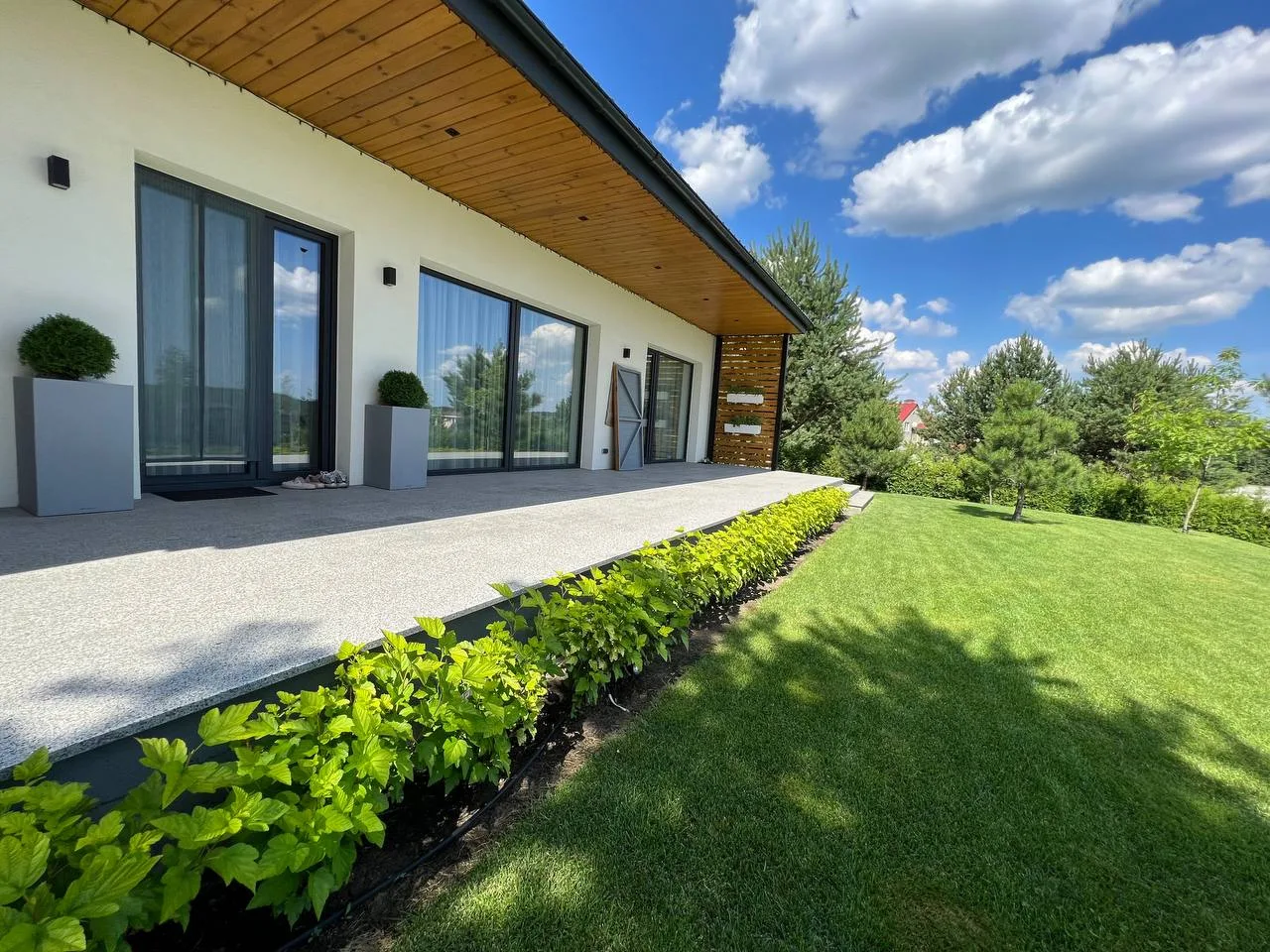 The House That Protected a Family During War
A Bucha client story about how an all-electric passive-level family house stayed livable for about a winter month without power, active heating or reliable communication.
Read article
The House That Protected a Family During War
A Bucha client story about how an all-electric passive-level family house stayed livable for about a winter month without power, active heating or reliable communication.
Read article
 Two-side insulated strip foundation
A practical ICF detail where the concrete strip foundation is formed inside permanent insulation, reducing site work while keeping the thermal envelope continuous.
Read article
Two-side insulated strip foundation
A practical ICF detail where the concrete strip foundation is formed inside permanent insulation, reducing site work while keeping the thermal envelope continuous.
Read article
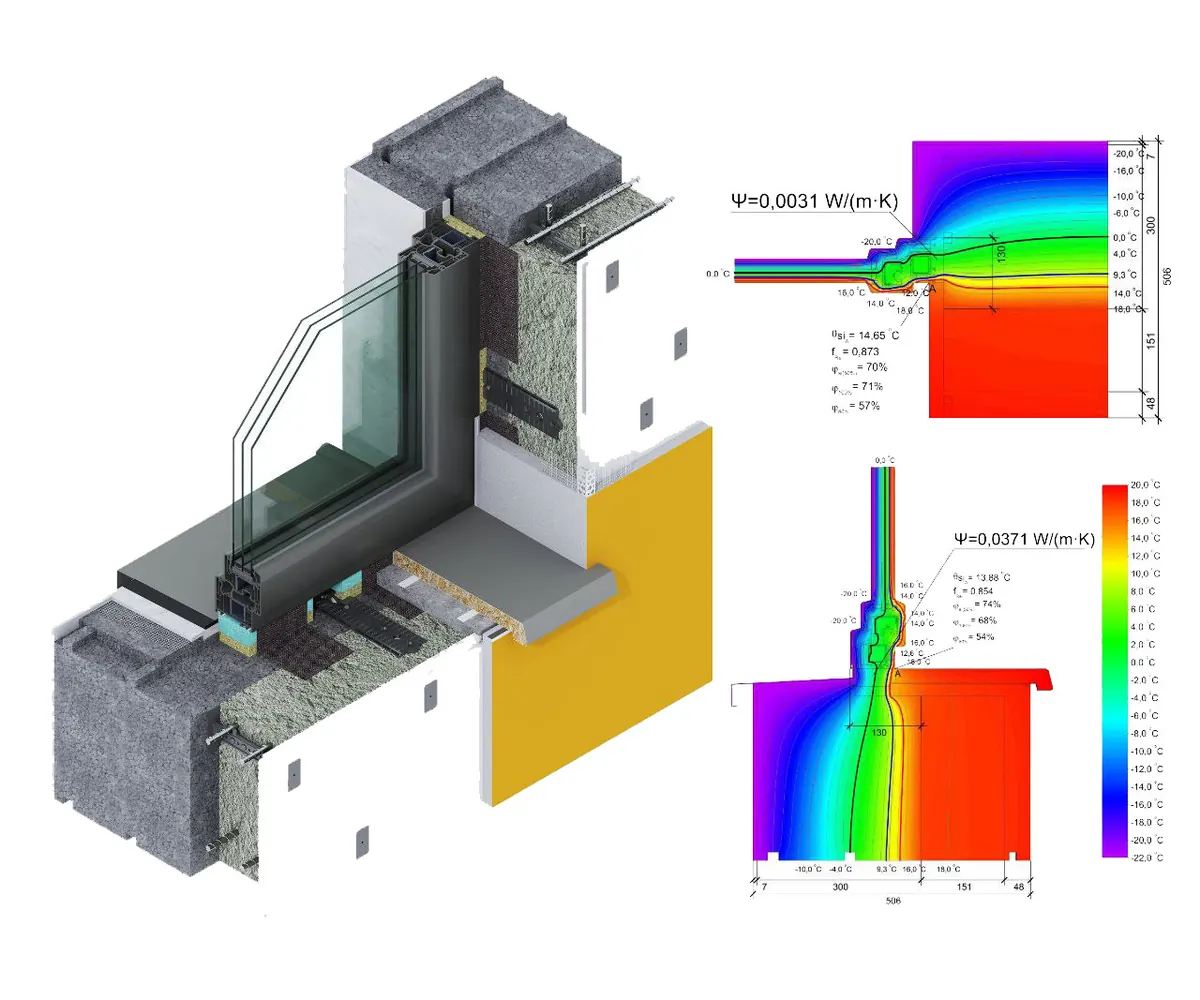 Warm Window Installation: Moving the Frame Into the Insulation Layer
Why high-performance wall systems should place the window frame inside the insulation plane instead of leaving it on the structural wall edge.
Read article
Warm Window Installation: Moving the Frame Into the Insulation Layer
Why high-performance wall systems should place the window frame inside the insulation plane instead of leaving it on the structural wall edge.
Read article