


Insulated Foundation
Overview
Page 01 / 03The foundation is the first technical decision in a passive-house-oriented building. If the base is weak thermally, the wall system starts with a permanent defect.
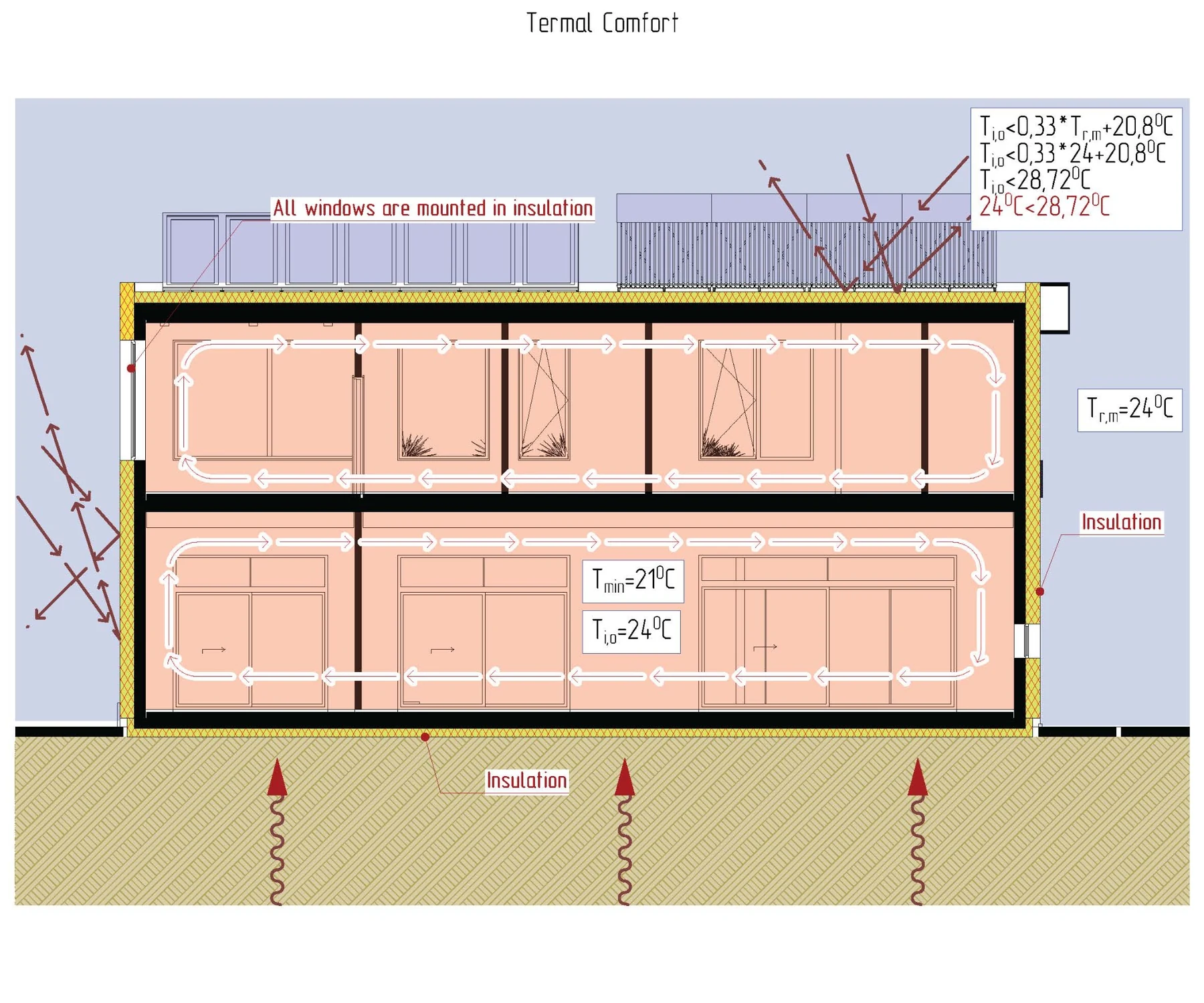
Insulated foundation is not a decorative upgrade. It is the base layer of the energy concept. The wall can have very high thermal resistance, but if the wall starts on a cold bridge, the building loses part of its performance before the first block is installed. In a real Passive House Block project, the foundation is therefore treated as a thermal and structural datum: it must distribute loads, protect the base from moisture, control heat flow into the ground and create a clean line where the wall insulation can continue without interruption.
Why it matters
The lower junction is one of the places where builders often lose the logic of the envelope. A wall U-value table looks strong on paper, but the wall-to-foundation detail determines whether the thermal layer is continuous in reality. A passive building does not tolerate weak base details because they become permanent, hidden losses.
What the client feels
A better foundation detail is not visible after completion, but it changes comfort. Floors are less cold near external walls, interior humidity risks are easier to control, heating demand is lower and the building becomes more stable during periods of reduced heating or electricity interruptions.
Foundation Logic
Page 02 / 03For Passive House Block, the correct base detail is the one that lets structure, insulation and airtightness meet without forcing the wall to compensate for foundation mistakes.
Structural role
The foundation must carry reinforced concrete wall loads, floors, roof loads and local ground conditions. It should be engineered as part of the building, not copied as a generic detail. In rocky, sloped or difficult-access sites, this decision also affects construction logistics and concrete delivery strategy.
Thermal role
Ground-contact heat loss is calculated differently from wall heat loss. That is why the base needs its own detail: slab edge insulation, perimeter insulation, moisture protection and a protected line for the vertical insulation layer.
Airtightness role
Airtightness must start at the base. If the envelope is treated only as a wall property, service penetrations, slab edges and plinth transitions become uncontrolled leakage zones. The foundation plan should show where the air-control layer begins and how it connects to the wall.
Buildability role
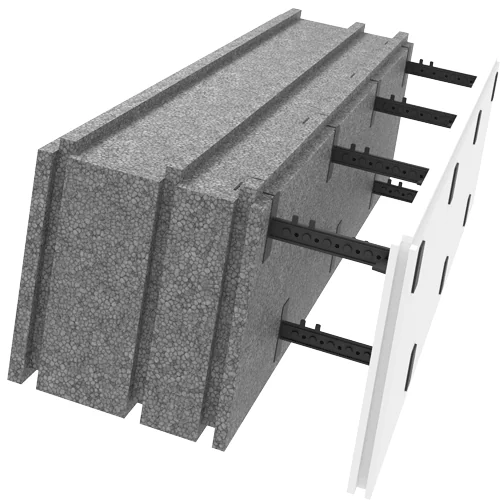
The advantage of Passive House Block is that a wall can be built efficiently, but the system still needs a clean starting geometry. A level, accurate, protected base reduces corrections, saves time and makes the first wall course a technical asset rather than a fight on site.
Specification Notes
Page 03 / 03The specification should be short enough for a client to understand and precise enough for the engineer to detail.
Use as article blocks
- Insulated slab or engineered foundation appropriate to soil and building loads.
- Continuous perimeter insulation at slab edge and plinth.
- Thermal bridge review at wall-to-foundation junction.
- Moisture and capillary protection coordinated with insulation.
- Clear start point for airtightness strategy.
Do not overpromise
Do not claim one universal foundation detail for every country or plot. A passive-house-oriented foundation must be adapted to soil, seismic requirements, groundwater, frost depth, slope, local code and structural engineer input.
Client explanation
It is more convincing to explain the foundation as a risk-control layer than as an expensive hidden upgrade. The client pays once for a base that protects the building for decades; fixing thermal or moisture mistakes later is far more expensive.
Technical anchor
Wall thermal resistance and ground heat transfer should not be mixed into one simplified number. The wall is normally assessed by wall build-up calculations, while ground-contact elements require separate heat-transfer logic.
Source notes
These article pages are written as publishing-ready technical content, not as certification claims. Final values must be verified by the project engineer, local code calculation, wall build-up, thermal-bridge model and site testing.


More Tech Lab articles.
Dew Point Explained
Condensation risk, wet insulation behaviour and why internal wall insulation needs special care.
Read article
 Passive House Block Walls
Exterior insulation, reinforced concrete core and the build logic behind the main wall system.
Read article
Passive House Block Walls
Exterior insulation, reinforced concrete core and the build logic behind the main wall system.
Read article
 Continuous Thermal Envelope
How insulation, airtightness and thermal-bridge control stay continuous around the building.
Read article
Continuous Thermal Envelope
How insulation, airtightness and thermal-bridge control stay continuous around the building.
Read article