


Answer-first summary
A two-side insulated strip foundation is a buildable detail where the reinforced concrete strip is poured inside a permanent insulated ICF block. The block replaces temporary formwork, remains as insulation around the foundation and makes the plinth easier to connect to the wall insulation without a cold break.
The insulated ICF block defines the foundation geometry during the pour and stays in place afterward.
The two sheets can be specified as 50 + 50 mm or 50 + 100 mm depending on the project detail.
Plastic ties set the reinforced concrete core from 100 to 400 mm; engineering still decides the final thickness.
Key takeaways
- The structural element is the reinforced concrete core, not the insulation.
- The system combines formwork and foundation insulation in one construction sequence.
- The foundation insulation must connect to wall and roof insulation as one thermal envelope.
- The detail is useful where an insulated strip foundation is appropriate and a full slab is not required.
- Soil, loads, reinforcement, depth and concrete core thickness must be calculated for each project.
What the insulated ICF block does
The insulated foundation block forms the concrete strip and insulates the foundation and collar zone at the same time. It consists of two XPS sheets connected by adjustable plastic ties. Depending on the project, the insulation can be specified as 50 + 50 mm or 50 + 100 mm.

The ties set the concrete core. The cavity can be configured from 100 to 400 mm, allowing the engineer to match the strip width to the house loads and soil conditions.
The reinforced concrete carries the load. The XPS is not the structural member. It defines the form, reduces heat loss and helps protect the plinth zone from unnecessary thermal bridges.
Why it matters for an energy-efficient house
In a conventional strip foundation, the concrete mass can create a direct thermal path between the building and the ground or outside air. The sensitive point is the junction between foundation, plinth, wall and floor. If this line is not resolved early, it becomes one of the first thermal bridges in the envelope.
A two-side insulated strip foundation wraps the concrete core in insulation and gives the design team a cleaner way to connect the foundation to the wall build-up. This is especially relevant for the Passive House Block wall system, where structural mass and insulation are coordinated as one wall logic.
One continuous thermal envelope
For an energy-efficient house, separate insulated parts are not enough. The lower detail has to join the rest of the shell, so the thermal layer continues without a cold interruption.
The same logic applies around openings. Windows and external doors should be installed outward into the insulation layer where the wall system requires it, so the frame sits inside the warm thermal layer and the perimeter thermal bridge is reduced. The warm window installation detail follows this same envelope logic at the opening.

Practical advantages
- Up to 2x lower concrete volume In suitable strip-foundation cases, the precisely defined core can reduce concrete volume compared with conventional massive strip logic.
- No temporary stripping stage The ICF block is permanent formwork, so it is not removed after the concrete pour.
- No separate post-installed insulation layer The insulation is already part of the foundation system, reducing later site work and fixing errors.
- Reduced thermal bridges Insulation on both sides of the core makes the foundation-to-wall junction easier to keep warm and continuous.
Time and cost effect
Because formwork and insulation are combined in one element, the system can shorten the construction process. Depending on the project, site conditions and foundation geometry, the detail can provide up to 50% faster construction time, estimated cost reduction up to 32% and up to 2x lower concrete volume in suitable strip-foundation cases.
Where a full insulated slab is not technically required, this strip-foundation approach can also be up to 3x cheaper than an insulated Swedish slab. For projects where the slab itself is the better structural and services strategy, compare it with the existing insulated Swedish slab foundation practice note.
These figures are project-dependent benchmarks, not universal structural rules. Every foundation must be checked against the soil report, loads, concrete core thickness, reinforcement, waterproofing, drainage and local building requirements.
When this detail is appropriate
A two-side insulated strip foundation is useful when the project needs an energy-efficient foundation detail but does not require a full insulated slab solution. It is relevant for private houses, passive and low-energy homes, insulated wall systems, plinth zones that need strong thermal continuity and sites where strip foundations are more practical than slab foundations.
- Confirm that strip-foundation logic is appropriate for the site and building loads.
- Define the concrete core, reinforcement, depth and concrete specification by calculation.
- Coordinate waterproofing and drainage before the foundation layout is finalized.
- Resolve the transition to floor, wall insulation and facade line before site work begins.
- Use the continuous thermal envelope as the design control line, not as an afterthought.
Engineering note
The ICF block does not replace structural engineering. The reinforced concrete core carries the load, and its geometry must be designed for the specific house. A correct foundation design must define soil bearing conditions, depth of foundation, concrete core thickness, reinforcement layout, concrete specification, waterproofing, drainage and the connection to the wall and floor build-up.
The insulation block improves construction logic and thermal performance, but the foundation remains a project-specific engineered reinforced concrete structure.
Practice video
The site video below shows the practical logic of the two-side insulated strip foundation with insulated ICF blocks.
Frequently asked questions
Short answers before specifying a two-side insulated strip foundation.
Is the XPS insulation structural?
No. The reinforced concrete core carries the structural load. The XPS sheets form permanent insulated formwork and reduce thermal bridging in the foundation zone.
When is this better than an insulated Swedish slab?
It can be a better fit when the project needs an insulated strip foundation and a full insulated slab is not required. The decision still depends on soil, loads, frost depth, drainage and the engineered concrete core.
Compare slab optionWhat must connect to the foundation insulation?
The foundation insulation must connect to the wall insulation, then to the roof insulation, so the house has one continuous thermal envelope without cold breaks at the plinth or openings.
Read envelope logic
Other In Practice articles.
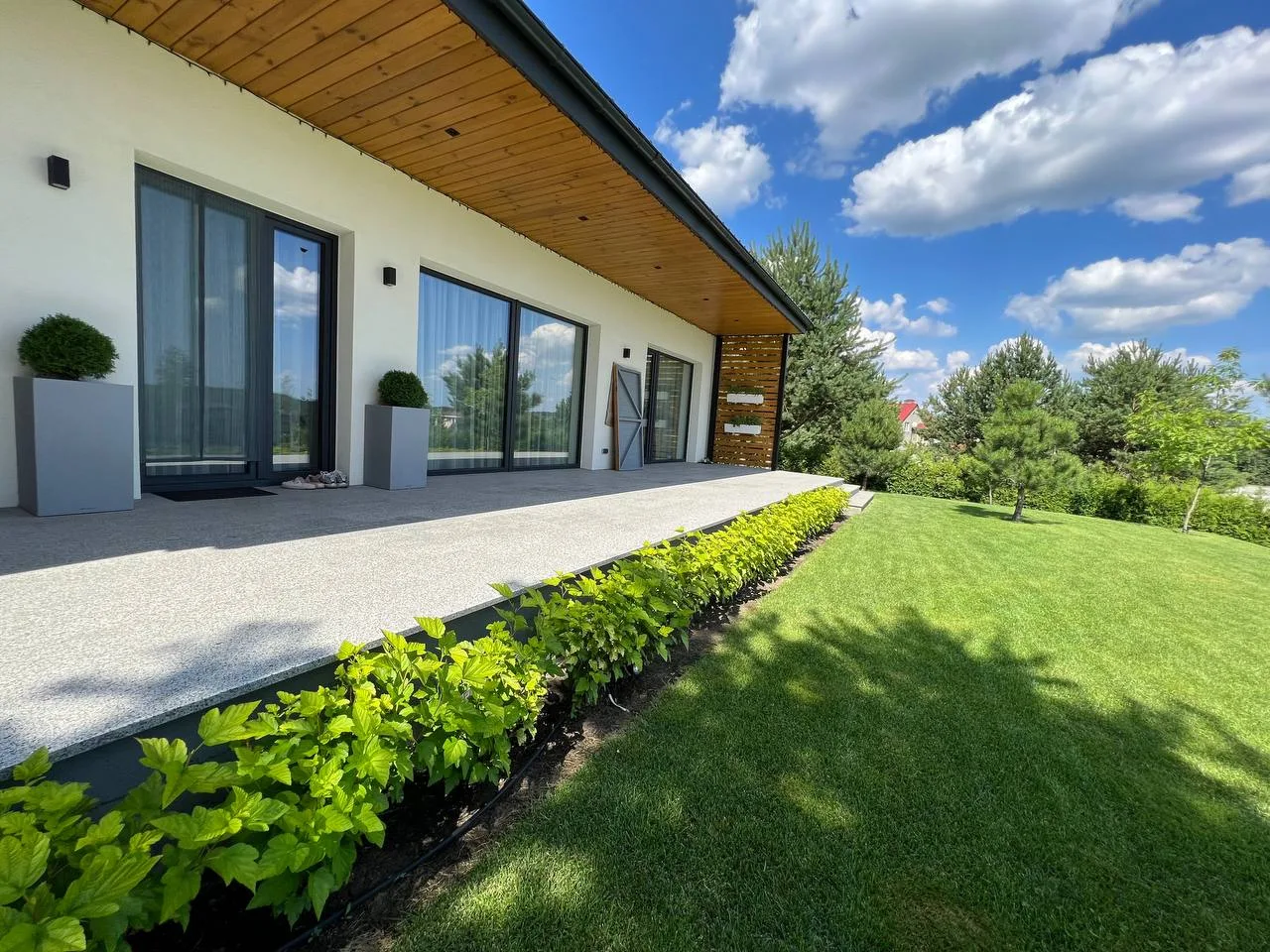 The House That Protected a Family During War
A Bucha client story about how an all-electric passive-level family house stayed livable for about a winter month without power, active heating or reliable communication.
Read article
The House That Protected a Family During War
A Bucha client story about how an all-electric passive-level family house stayed livable for about a winter month without power, active heating or reliable communication.
Read article
 Insulated Swedish Slab Foundation: UShP as a Warm Base for Passive Houses
How an insulated Swedish slab combines a shallow reinforced concrete foundation, continuous insulation, built-in services and warm-floor heating into one high-performance base.
Read article
Insulated Swedish Slab Foundation: UShP as a Warm Base for Passive Houses
How an insulated Swedish slab combines a shallow reinforced concrete foundation, continuous insulation, built-in services and warm-floor heating into one high-performance base.
Read article
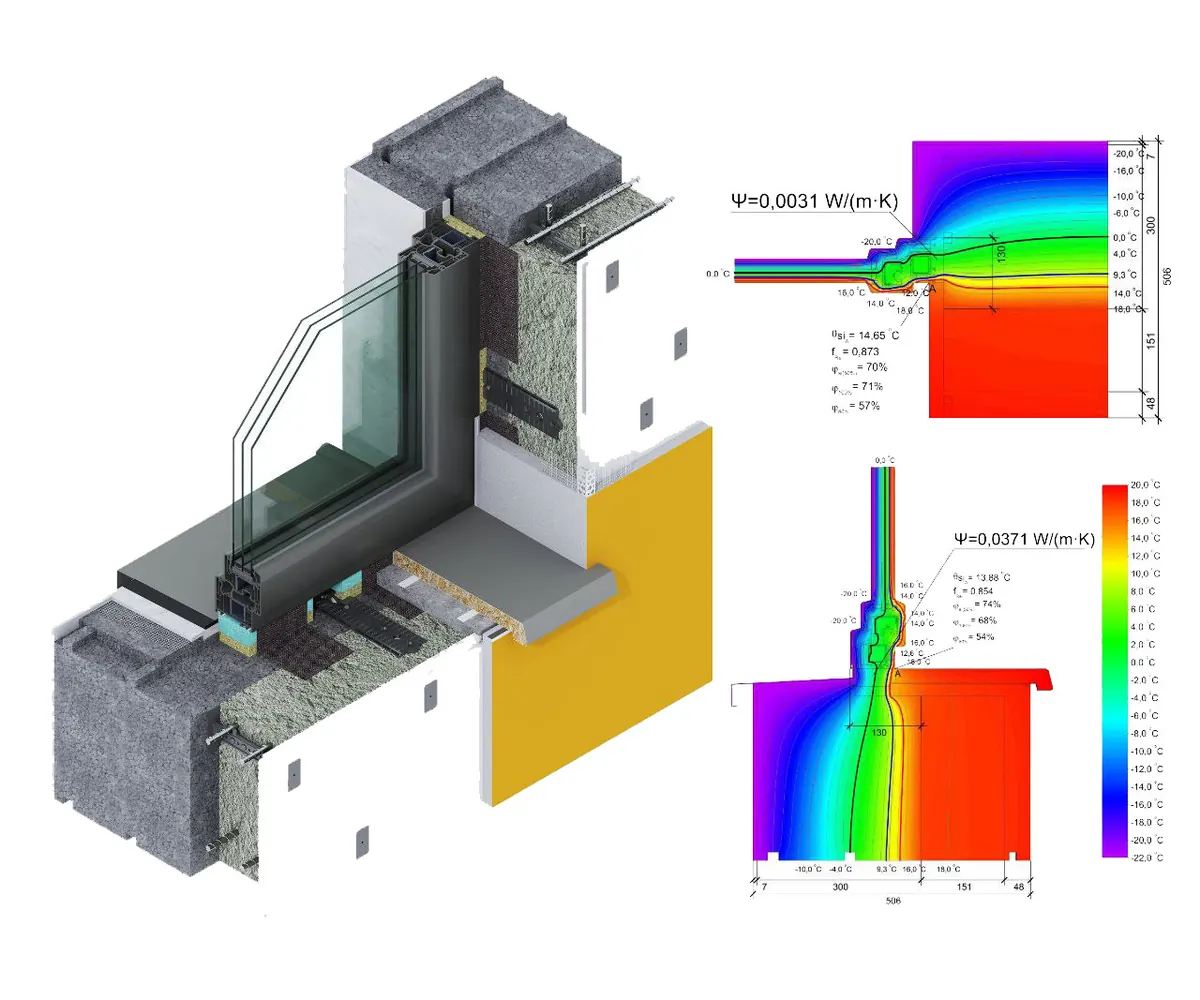 Warm Window Installation: Moving the Frame Into the Insulation Layer
Why high-performance wall systems should place the window frame inside the insulation plane instead of leaving it on the structural wall edge.
Read article
Warm Window Installation: Moving the Frame Into the Insulation Layer
Why high-performance wall systems should place the window frame inside the insulation plane instead of leaving it on the structural wall edge.
Read article