


Sustavi zgrada s malom potrebom za energijom
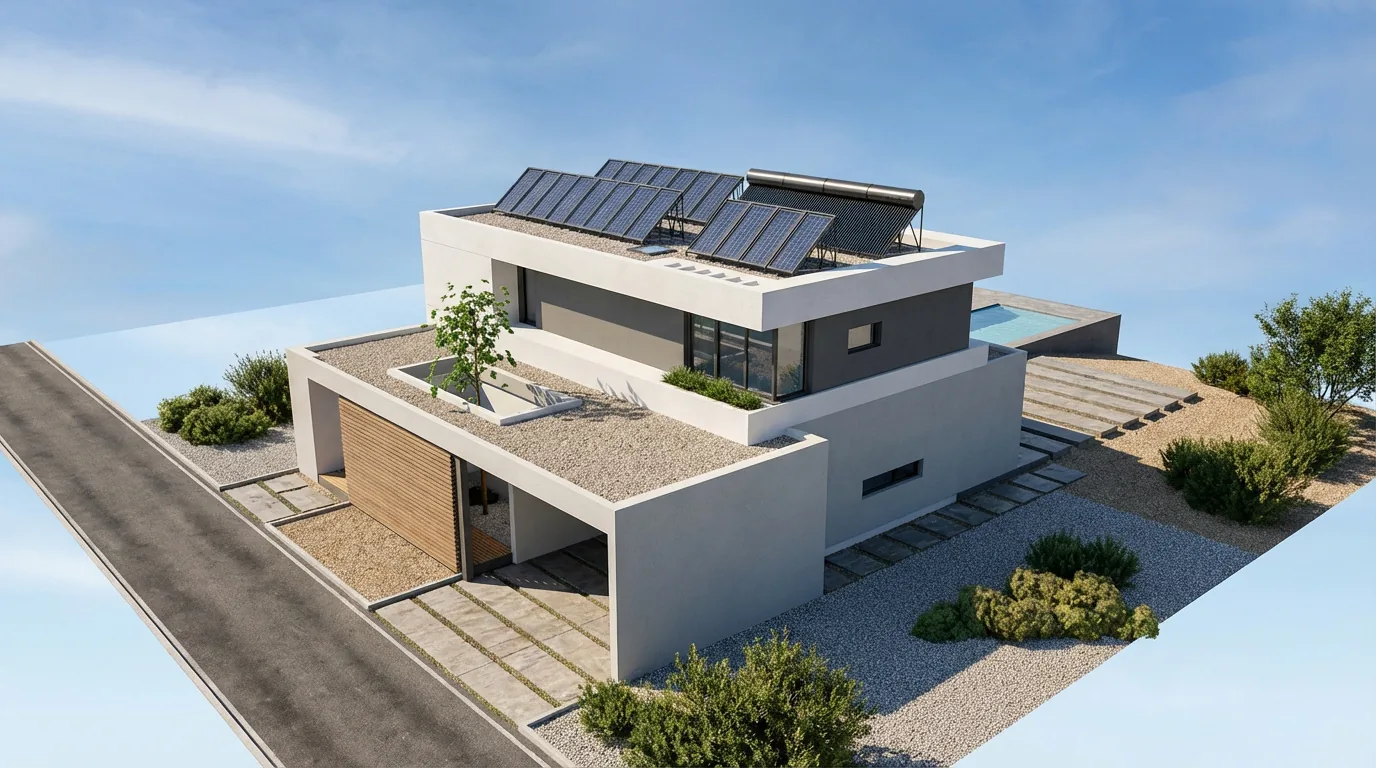
Overview
Page 01 / 03The best building systems are the ones that do not need to fight a weak envelope every day.
Toplina pumps, solarni paneli i učinkovit ventilacija su valuable. mistake je uporabe them kao substitute za poor shell. zgrada s slab izolacija, propuštanje zraka i toplinski mostovi sile tehnologija u rad harder. zgrada s jak ovojnica smanjuje potreba prvo; zatim sustavi become smaller, quieter, less stressed i lakše u operate. Ovo je logika to treba sit behind whole Passive House Block website: izolacija prvo, tehnologija drugo, real otpornost.
Why this is modern
Modern design is not only the shape of the house. It is the reduction of dependency. When the building itself holds temperature better, the owner is less exposed to energy price changes, service delays, fuel availability and equipment downtime.
Why it is easier to sell
Clients understand solar panels and heat pumps because they are visible products. The website should use those products to explain the envelope: the systems work best when the building demand is already low.
Insulation First
Page 02 / 03The “why insulate if we can buy technology?” objection should be answered respectfully and technically.
Yes, efficient technology is useful. A heat pump can multiply delivered heat from electricity, solar panels can produce renewable energy and ventilation with heat recovery can reduce ventilation losses. But all of those systems respond to demand. They do not erase the physics of a weak envelope. If the building leaks heat, the equipment works more often. If the envelope overheats, cooling demand rises. If air leakage bypasses the heat exchanger, ventilation recovery loses value. If the building loses temperature quickly during an outage, the owner feels the weakness immediately.
Envelope first
Insulation, airtightness and thermal-bridge control reduce the problem before equipment starts solving it. This creates smaller design loads and more comfortable passive stability.
Technology second
Once demand is reduced, a heat pump can be sized more intelligently, ventilation can operate with lower losses and PV can cover a larger share of annual consumption.
Real life
In perfect conditions, every system works. In real life, maintenance, weather, user behaviour, power cuts, war, supply delays and service availability matter. A passive envelope is the part that does not need a technician to keep doing its job.
Commercial result
A low-demand home is easier to explain to investors and owners: lower operating risk, better comfort, lower system stress and stronger long-term value.
System Strategy
Page 03 / 03The systems page should read like a controlled sequence, not a shopping list.
Ventilation
Controlled ventilation protects indoor air quality without relying on accidental leakage. In a tight building, heat recovery becomes meaningful because the airflow path is intentional.
Heat pump
The heat pump should be sized after the envelope is calculated. Oversizing can increase cost and cycling; undersizing can reduce comfort. Low demand gives the designer more room to choose a calm, efficient system.
Solar panels
Photovoltaics are most convincing when consumption is already reduced. The same roof area covers a larger share of the building’s annual energy needs when the envelope is efficient.
Smart controls
Controls should support comfort, shading, ventilation and energy use without turning the home into a fragile gadget. The envelope remains the base layer of performance.
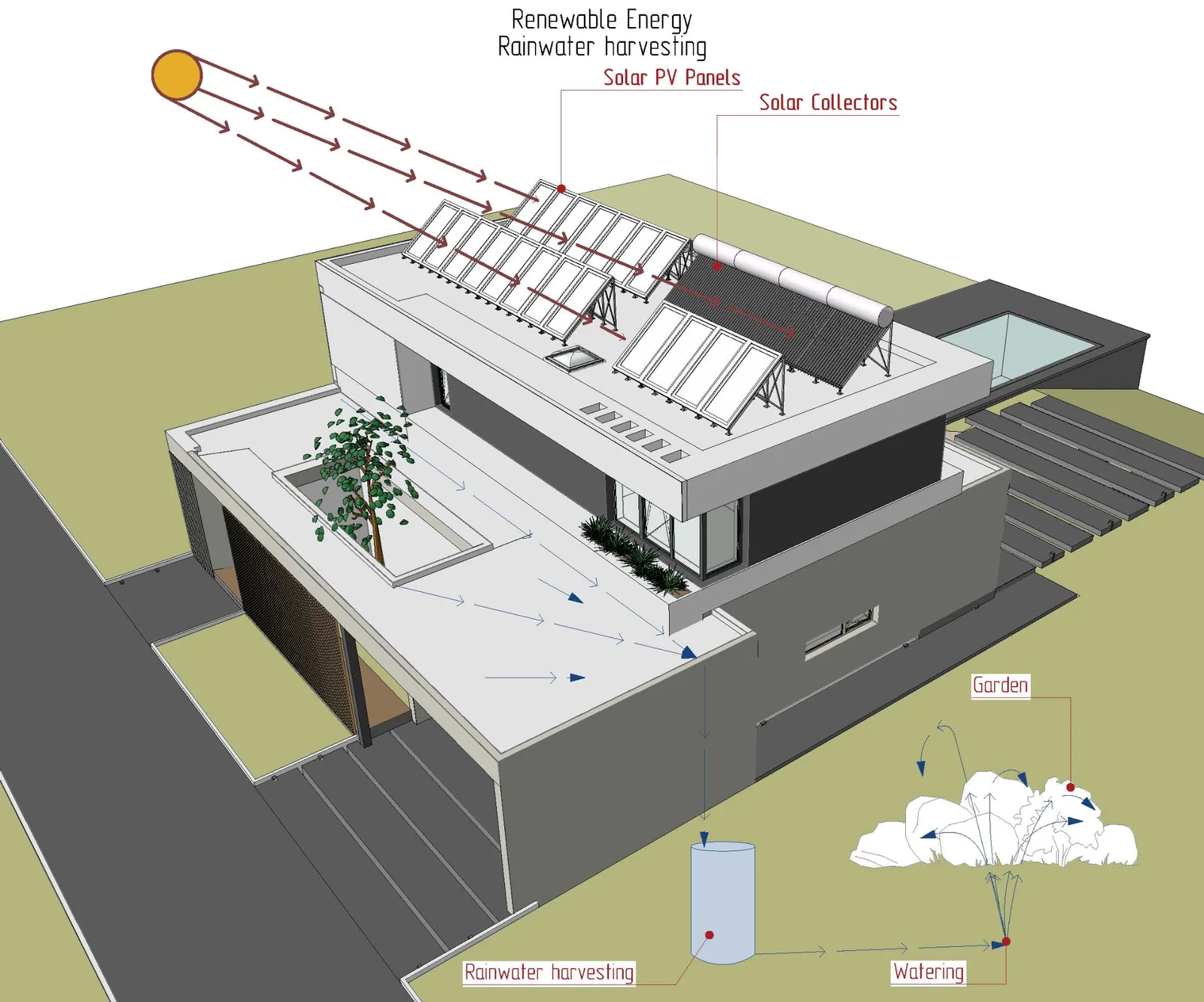
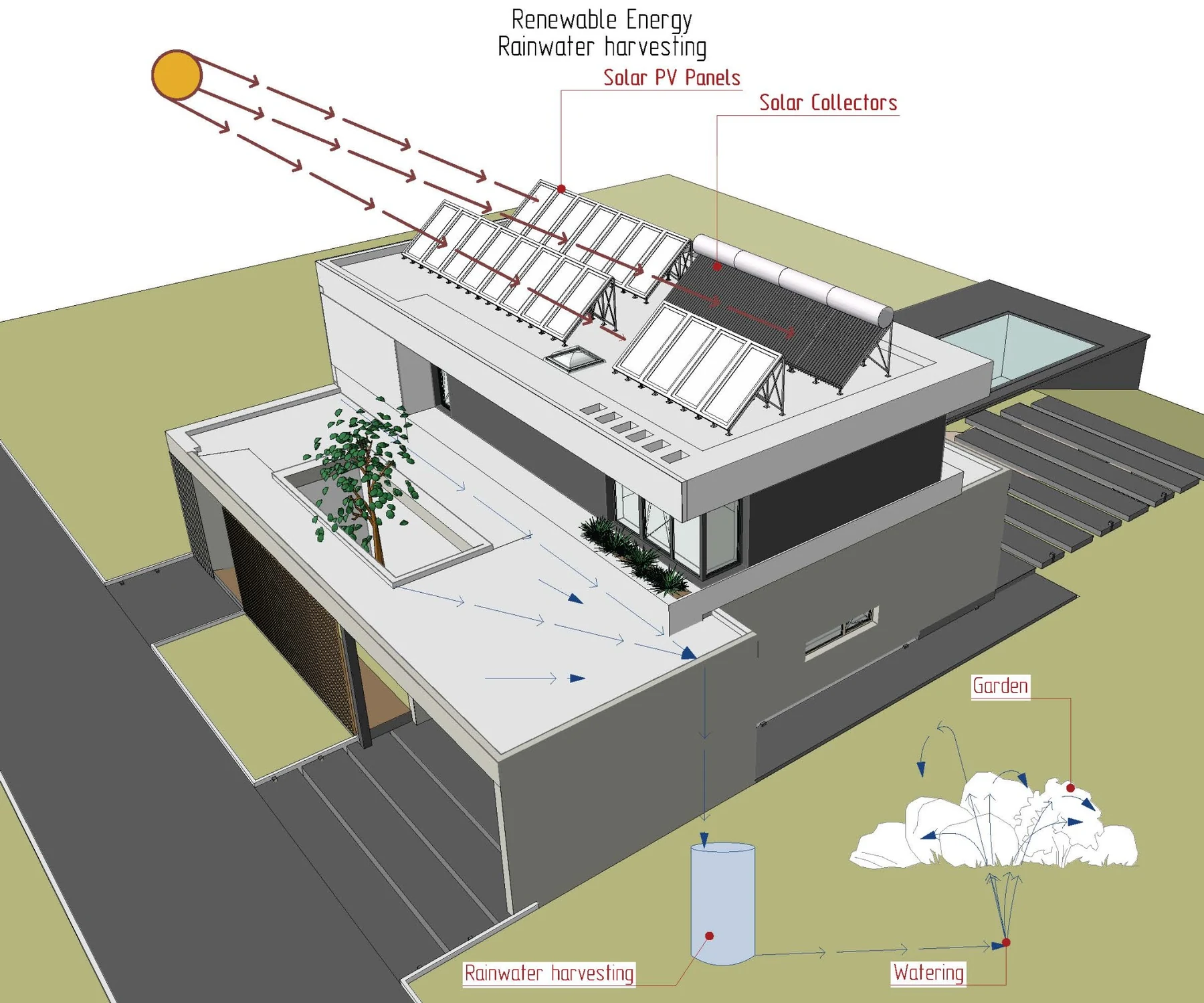
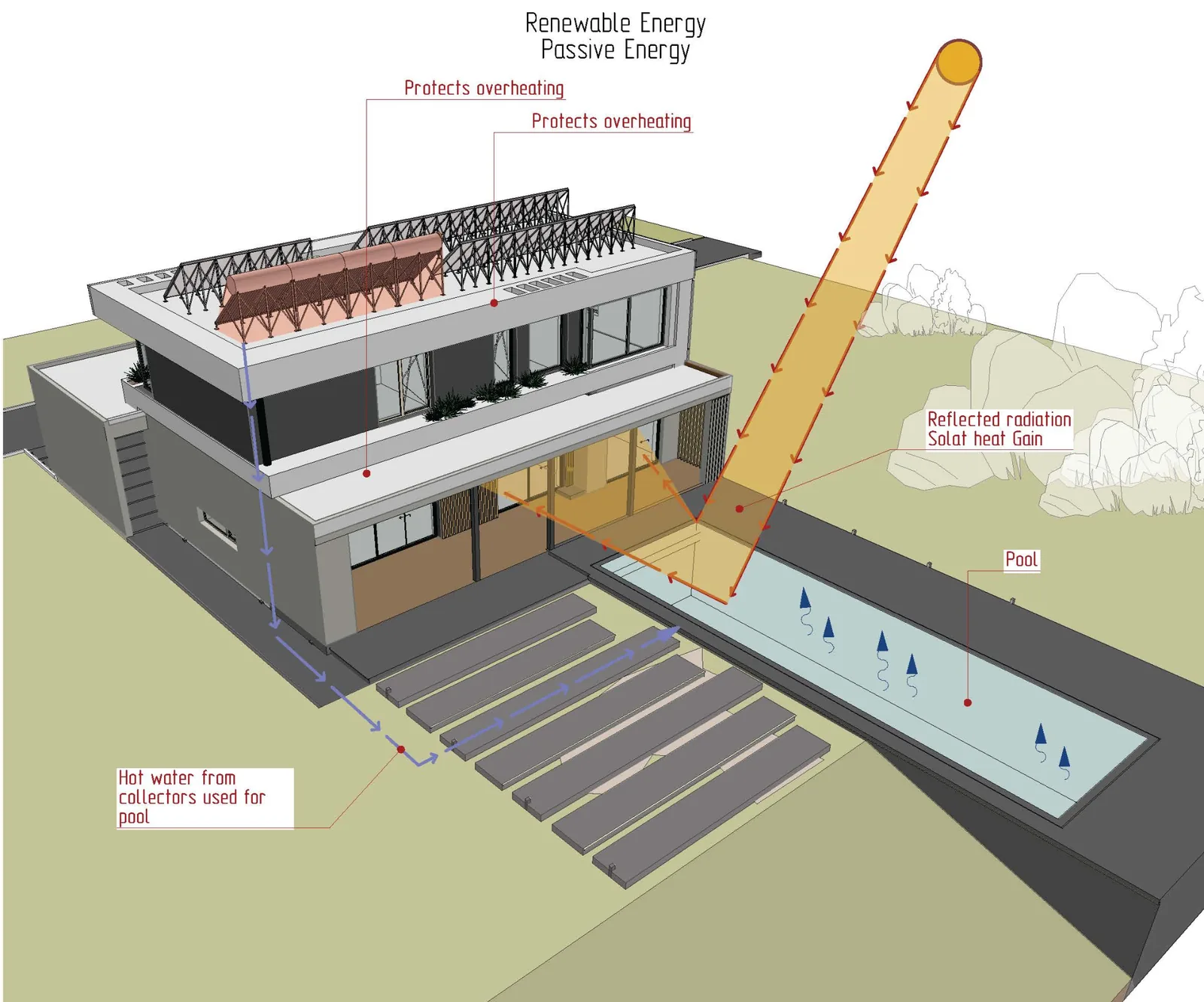


More Tech Lab articles.
 Dew Point Explained
Condensation risk, wet insulation behaviour and why internal wall insulation needs special care.
Read article
Dew Point Explained
Condensation risk, wet insulation behaviour and why internal wall insulation needs special care.
Read article
 Passive House Block Walls
Exterior insulation, reinforced concrete core and the build logic behind the main wall system.
Read article
Passive House Block Walls
Exterior insulation, reinforced concrete core and the build logic behind the main wall system.
Read article
 Continuous Thermal Envelope
How insulation, airtightness and thermal-bridge control stay continuous around the building.
Read article
Continuous Thermal Envelope
How insulation, airtightness and thermal-bridge control stay continuous around the building.
Read article