


Bucha klijent kuća od story. Ono je bio projektiran kao comfortable potpuno električna obitelj dom; during war, njegov nizak toplina potreba became zaštita.
The house, the family and the phone call
This was not planned as an emergency shelter. It was planned as a good family house in Bucha: warm, bright, low in energy demand and stable in everyday life. We were trying to deliver the best result we knew how to deliver. During the war, that effort changed meaning. The house helped protect the family when the systems around it failed.
Za years, visokoučinkovit kuće su bili difficult u explain u many klijenti u Ukraine. Energija je bio relatively cheap, i most people su bili ne asking za passive-level zgrada. Oni asked za reliable dom, good planning, jasan budgets i puna gradnja. Naš pozicija je bio pragmatic: za isti level od investment, kuća može biti toplije, more stable i better detailed nego conventional alternative.
To je zašto ovo projekt mattered long prije war. team cared o things to su easy u ignore jer oni su hidden nakon gradnja: kontinuitet izolacije, spojeve, prozor placement, zrakonepropusnost, toplinski mostovi, winter sun i behavior od toplinska masa. Na time, ovi decisions looked like professional discipline. Later, oni became safety margin.
Kada u stvarnoj veličini invasion began, Bucha area lost power. kuća je bio fully electric: ne gas spoj, ne fireplace, ne backup boiler. Kada electricity stopped, aktivnog grijanja stopped kao well. Internet i mobile spoj su bili također unreliable. Ono je bio winter, there je bio snow izvan, i za o month there je bio ne contact s owners.
Zatim vlasnik kontrolirani u call. important message je bio ne o projektiranje, certifikacija ili utility bills. Ono je bio thank-you call. kuća had stayed livable kada ordinary kuće around ono cooled down very quickly.
No gas, no fireplace and no backup boiler were available when electricity failed.
The area had no reliable power, heat, internet or mobile connection during winter conditions.
The source account says the house cooled slowly from normal comfort toward 18°C.
During the month without active heating, the reported indoor temperature did not fall below 16°C.
Što happened unutar kuća
Before the blackout, the family lived at a normal indoor temperature of about 23°C. After the power was cut, the house did not create heat by itself. It simply lost heat slowly. In the first week, the temperature moved down to about 21°C. Over the following weeks it drifted toward 18°C. Across the month, the source account says it never dropped below 16°C.
Nearby conventional houses behaved differently. They cooled much faster, with reported indoor temperatures around +8°C after only a few days. That comparison is the core of the story. The Bucha house was not magic, and it was not "war-proof." It was a low-demand building with enough envelope quality and thermal stability to buy time.
Za obitelj u winter blackout, time nije abstract benefit. Ono znači kuća ne postaje unlivable immediately. Ono znači people have more room u think, adapt i make decisions. U normal life, ovo kind od projektiranje smanjuje bills i poboljšava udobnost. U emergency, ono može biticome zaštita.
Zašto kuća behaved differently
Most zgrade ostati comfortable samo dok energija keeps arriving. Kada grijanje stops, slab points become vidljiv fast: propuštanje zraka, hladan rub pločes, poor prozor detalji, interrupted izolacija, unprotected spojeve i uncontrolled toplina gubitak through roof i zidovi.
Ovo projekt used opposite hierarchy. Prvo smanjiti potreba za grijanjem. Zatim keep izolacija i logika zrakonepropusnosti kontinuiran. Zatim mjesto useful masa unutar protected toplinski zona. Zatim omogućiti winter sun u help zgrada instead od treating solar gain kao decoration. Mechanical sustavi i dalje matter, ali ovojnica asks less od them.
To je zašto phone call changed kako mi speak o energija efficiency. lesson je bio ne "save money." lesson je bio to responsible građevinska fizika može biticome care za people kada infrastructure breaks.
lesson za naš praksa
sentence to matters je simple: prema insisting na good result prije anyone knew kako serious budući bi become, kuća helped protect obitelj kada emergency arrived.
Since to iskustvo, mi ne treat passive-level envelopes kao tehnički extra. well-insulated, zrakonepropusan i toplinskily stable kuća smanjuje dependence na fragile external sustavi. Ono može keep internal surfaces toplije, slow temperature gubitak i give obitelji more forgiving zgrada kada life nije normal.
Ovo ne remove treba za specifičan za projekt inženjering, backup planning ili honest limits. Every klimu i every zgrada je različit. Ali Bucha story je real reminder to invisible detalji unutar zid može matter more nego any vidljiv finish.
Tehnologija behind story
selected images ispod nisu odvojeno story. Oni skako praktičan projektiranje logika behind result: passive solar thinking, usable toplinska masa, seasonal shading i daylight planning. Click any image u zoom.
Related tehnički pages
Napomena o izvoru
This Practice story is a rewritten Passive House Block case based on the client-provided Passive House war story package and the Danica article "The most important feedback we ever received about an energy-efficient house", published on January 6, 2024. The claim stays practical: the house helped protect the family because its low-demand design slowed heat loss and reduced dependence on active systems. It is a documented client case, not a universal guarantee.
Frequently asked questions
Short answers about the Bucha Passive House war resilience client story.
Was this Bucha house designed as a wartime shelter?
No. It was designed before the war as a comfortable, all-electric, passive-level family house. The same decisions became protective when power, heating and communication failed.
What happened inside the house during the winter blackout?
The source account says the house started near 23 C, moved to about 21 C after the first week, then slowly approached 18 C and did not go below 16 C during roughly a month without active heating.
What helped protect the family?
The result came from the whole design: continuous insulation, reduced thermal bridges, passive solar gain, useful thermal mass, controlled shading, airtightness thinking and measured daylight.
Can every passive-level house promise the same result?
No. Emergency performance depends on climate, starting temperature, airtightness, insulation continuity, windows, thermal mass, ventilation losses and project-specific engineering.

Other In Practice articles.
 Two-side insulated strip foundation
A practical ICF detail where the concrete strip foundation is formed inside permanent insulation, reducing site work while keeping the thermal envelope continuous.
Read article
Two-side insulated strip foundation
A practical ICF detail where the concrete strip foundation is formed inside permanent insulation, reducing site work while keeping the thermal envelope continuous.
Read article
 Insulated Swedish Slab Foundation: UShP as a Warm Base for Passive Houses
How an insulated Swedish slab combines a shallow reinforced concrete foundation, continuous insulation, built-in services and warm-floor heating into one high-performance base.
Read article
Insulated Swedish Slab Foundation: UShP as a Warm Base for Passive Houses
How an insulated Swedish slab combines a shallow reinforced concrete foundation, continuous insulation, built-in services and warm-floor heating into one high-performance base.
Read article
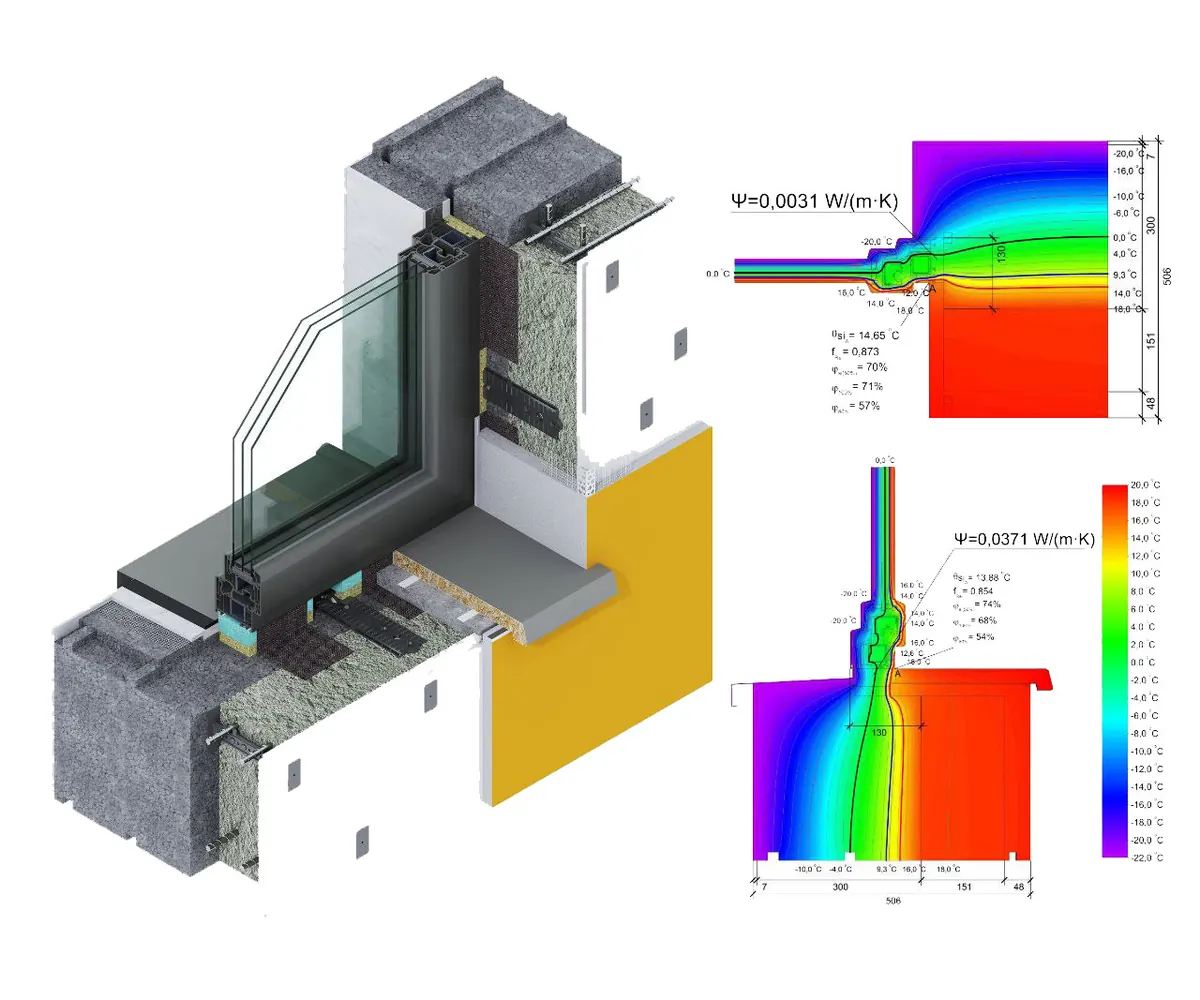 Warm Window Installation: Moving the Frame Into the Insulation Layer
Why high-performance wall systems should place the window frame inside the insulation plane instead of leaving it on the structural wall edge.
Read article
Warm Window Installation: Moving the Frame Into the Insulation Layer
Why high-performance wall systems should place the window frame inside the insulation plane instead of leaving it on the structural wall edge.
Read article